Vibratory Feeder
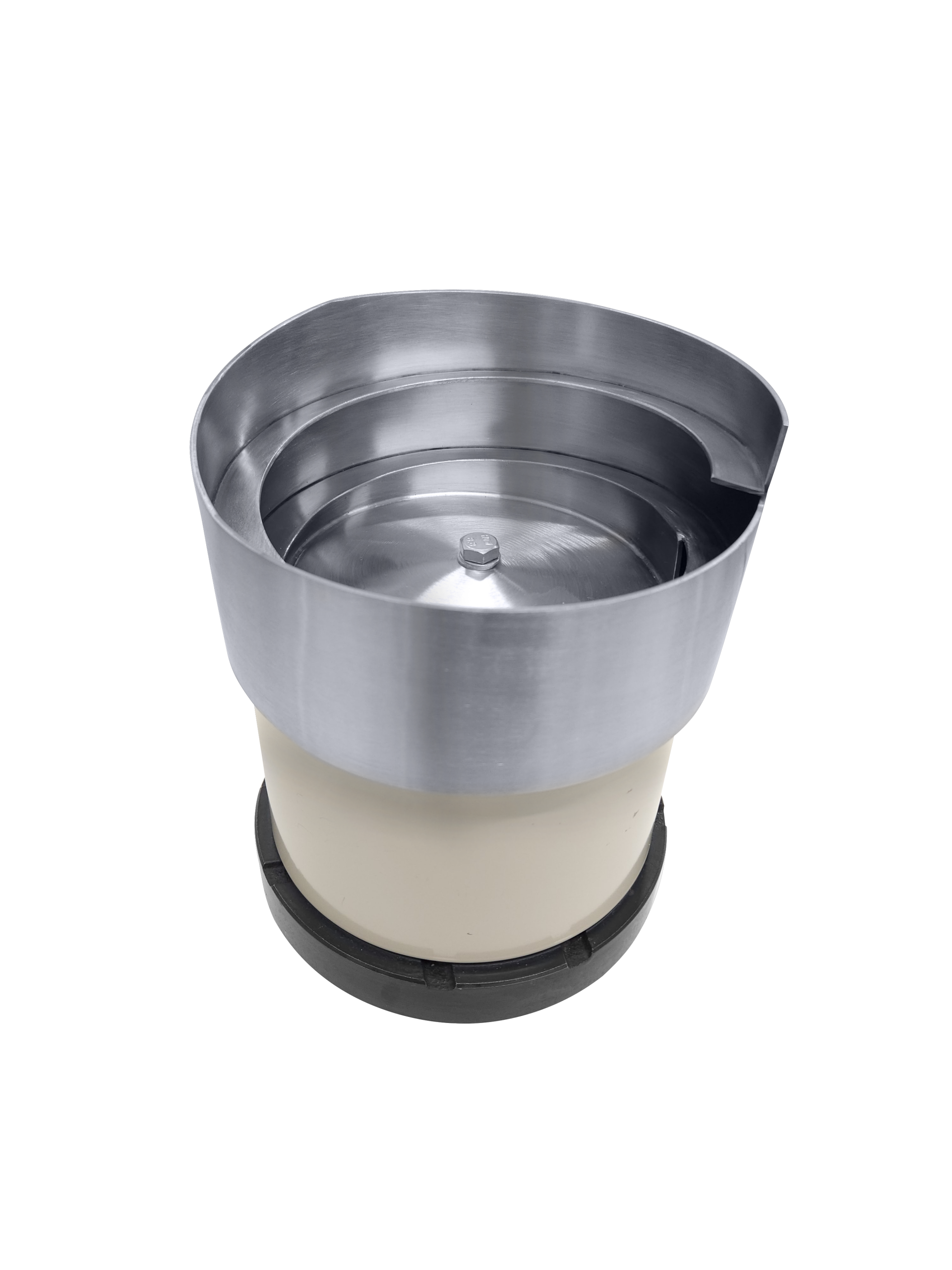
Vibratory bowl feeders are precision-engineered systems widely used in automated manufacturing for sorting, orienting, and feeding components of different sizes, weights, and materials. These feeders are designed for accuracy and efficiency, ensuring a continuous and correctly oriented flow of parts along production lines.
Technical Data Sheet:
Our Models:
Product Description
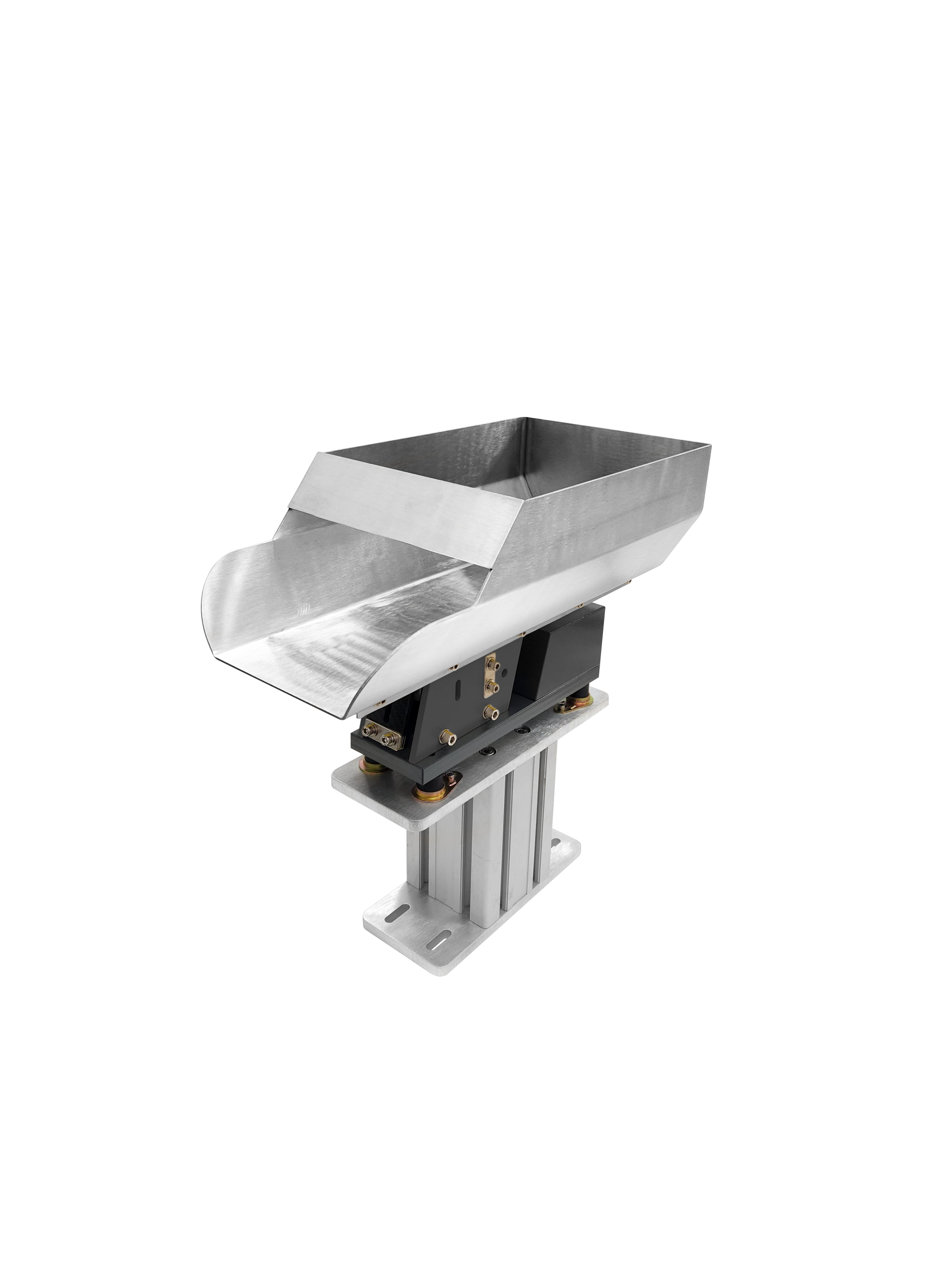
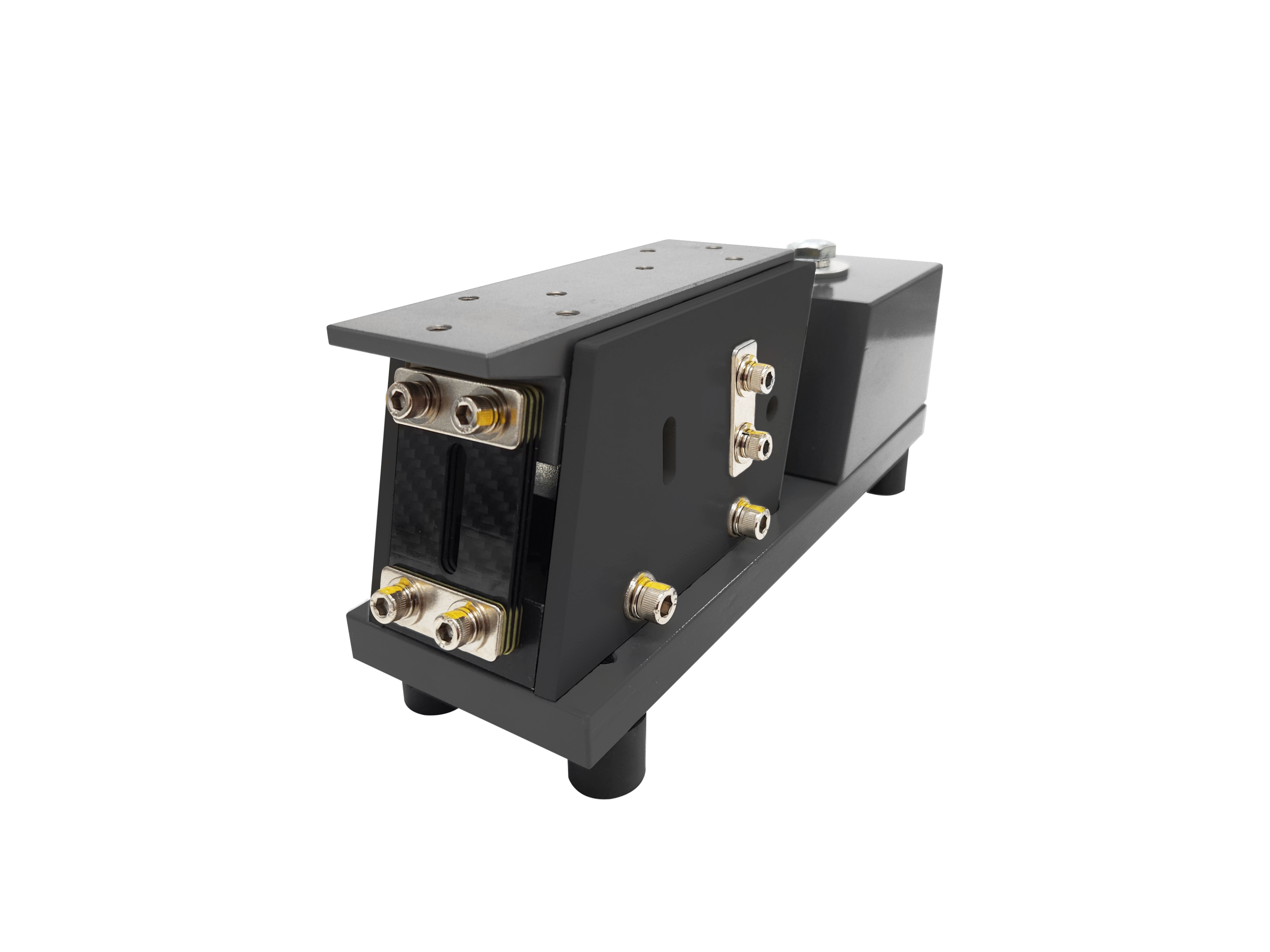
Inside or outside the vibratory bowl, orientation features guide each part into the proper position. When required, compressed air can be integrated to enhance alignment accuracy. The hopper, mounted on a vibratory drive unit, provides a controlled and consistent supply of parts to the feeding mechanism.
Each feeder system is customized based on the client’s specifications—considering factors such as dimensions, material composition, and surface treatment. The hopper sections are typically constructed from stainless steel grades 1.4301 or 1.4404, with the latter preferred for applications in food processing and pharmaceutical environments due to its superior corrosion resistance. Alternatively, EN AW-5754 (AlMg3) aluminum alloy is used for lightweight or general-purpose configurations.
The hoppers used in these systems fall into three main categories, each suited for particular handling requirements. Choosing the appropriate design depends on the nature of the material being processed. Every hopper can be tailored to meet customer demands regarding shape, capacity, and the slope of the transport channels, ensuring optimal performance for any automated feeding application.
Efficient handling – processes parts of various sizes, weights, and materials.
Accurate orientation – guiding elements and compressed air ensure precise positioning.
Optimal dosing – the hopper mounted on a vibrator guarantees consistent feeding.
Durability and hygiene – made from stainless steel 1.4301 and 1.4404 (ideal for the food and pharmaceutical industries).
Total flexibility – can also be made from EN AW-5754 aluminum alloy, customized to meet client requirements (dimensions, shape, paths).